Use your network
Send video over a suitable private wired network or Wi-Fi instead of running dedicated HDMI cables to every screen. Existing networking may be enough; larger installations and busy Wi-Fi require capacity and coverage planning.
 Start here
Use your local network to share video and digital signage across compatible screens in churches, gyms, waiting rooms, cafes, and more.
Turn your displays into information and entertainment. Built in a sports bar, DisplayHUB is a local-network video distribution system that helps other venues share compatible sources across screens and add digital-signage-style content.
In the full system, one dedicated Android Controller manages the location and a separate Android Encoder handles each input. Supported player apps receive the selected video on compatible TVs or streaming devices. Staff use a browser on the same trusted private network to configure the system and assign sources to screens.
For example, a church can send a compatible live service feed to several rooms, while a second encoder provides a different input for other screens. An HDMI source needs compatible capture hardware and a suitable charging setup; available network tuners and video files can use other supported inputs. See the setup guide and check player compatibility.
A practical alternative to a traditional matrix
Send video over a suitable private wired network or Wi-Fi instead of running dedicated HDMI cables to every screen. Existing networking may be enough; larger installations and busy Wi-Fi require capacity and coverage planning.
Use Android devices for the controller and encoder inputs, and supported player apps on compatible TVs and streaming devices. You may already own some of what you need; hardware, power, and HDMI capture accessories still depend on your setup.
Test one source and screen before expanding. The core system is free to try without a credit card or time limit, with watermarked displays. Add inputs and screens as your needs and network allow; paid display licenses remove branding.
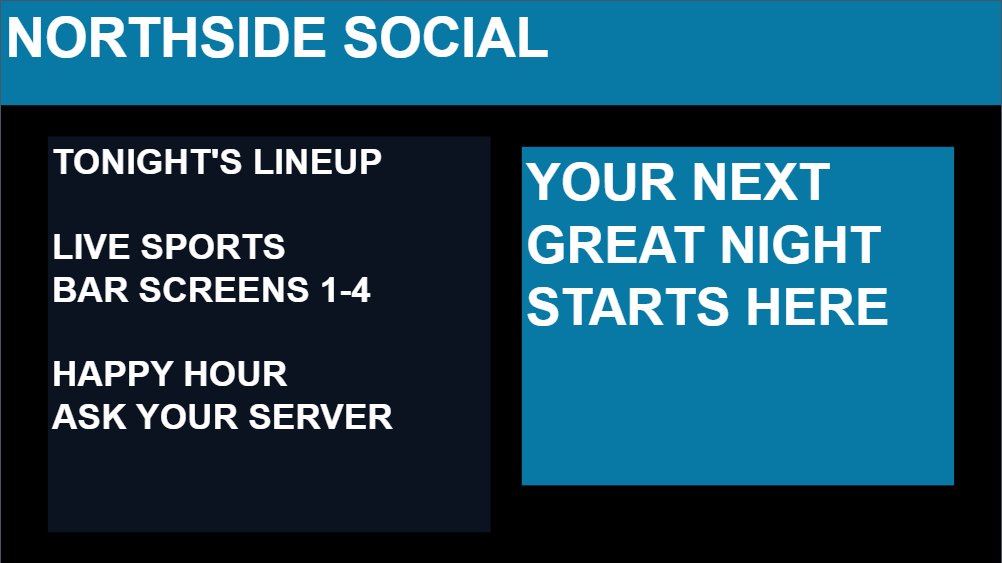
Paid subscribers can use the built-in overlay editor to combine video with promotions, announcements, social content, menus, images, and web pages. Give a small venue digital-signage possibilities without a large dedicated installation.
Reusing compatible equipment and networking can reduce installation costs, making multi-screen distribution practical even where a traditional matrix might not have been feasible. Compare the full cost of hardware, network work, installation, and optional licenses for your venue. Compare systems and costs.
Beyond sports bars
Share a live service from a compatible source with fellowship halls, overflow rooms, and other parts of the campus. Add announcements and upcoming events alongside the video.
Bring menus to life with images and video of drinks and food. Promote seasonal favorites and specials where customers are deciding what to order.
Show news from an authorized HDMI source alongside advertisements and a web page showing a queue or who is next. The queue page must support embedding and be reachable by the encoder; avoid displaying private information without appropriate safeguards.
Reach compatible displays across a connected campus without dedicated AV cable runs between every building. Devices need a suitable shared private network, typically the same subnet, with sufficient capacity and device-to-device reachability.
For guests who are hard of hearing, consider compatible Android players with headphones for individual listening. Test the player, headphone connection, volume, and delay in your actual setup; this is not a substitute for assessing accessibility requirements.
Show motivating video, promote classes and drinks, and use an overlay clock or a compatible web page to communicate the next class time.
Share trailers and coming-soon posters on lobby displays to keep guests informed about upcoming releases.
Pair news or other video with production numbers, notices, and the day's cafeteria menu. A compatible embedded web page can display information from an existing dashboard.
Show property photos, videos, and current listings in the office or on a window-facing display.
Local control and available local-source playback can continue without internet while the private network and devices remain powered. This can suit mobile environments with a suitable onboard network; internet-fed content still needs connectivity, and extended license-check outages may result in a watermark.
Try the core software free with watermarked displays, then expand when you have verified your source, player, and network. Hardware and content subscriptions are separate. A traditional matrix or professionally installed AV system may be a better fit for protected HDMI transport, strict synchronization, or specialized audio and video requirements.
Overlay media, web pages, and widgets depend on device compatibility; some websites block embedding. Test your content and actual output, and use content you have permission to display. Explore the overlay editor, review free and paid options, and plan your network.